
Brain Health, Cognitive Ageing, & Memory Concerns
Concerns about memory, thinking, and the possibility of developing dementia—often referred to as dementia worry—are common and can be a significant source of anxiety. Individuals may seek support due to concerns about their cognitive health, perceived risk, or following a diagnosis of mild cognitive impairment or dementia. These concerns can include changes in memory, attention, and daily functioning, as well as uncertainty about the future.
A proactive approach can help individuals better understand cognitive ageing, support brain health and cognitive functioning, and develop strategies to maintain independence and everyday functioning. While not all cognitive changes can be prevented, the Lancet Commission report on dementia prevention, intervention, and care estimates that approximately 40% of dementia cases are associated with modifiable factors. This means there are meaningful ways to support cognitive health and address factors associated with increased risk of cognitive decline.
Cognitive Rehabilitation Therapy (CRT) principles may also inform proactive approaches to supporting cognitive health and cognitive ageing. These approaches focus on understanding individual cognitive strengths and challenges, developing effective strategies, and encouraging meaningful cognitive stimulation and engagement in everyday life. Research suggests that lifelong cognitive stimulation and engagement in mentally, socially, and functionally meaningful activities are associated with better cognitive outcomes and a reduced risk of dementia. Learning about and applying these principles may help individuals maintain cognitive functioning, support independence, and address modifiable factors associated with cognitive decline.
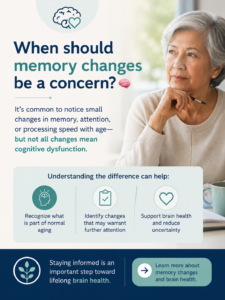
Dr. Heike provides care and guidance in a safe, compassionate, and non-judgmental environment. Services focus on helping individuals better understand cognitive ageing, brain health, memory concerns, and factors that influence cognitive functioning over time. Support may include education, guidance, and practical strategies to help individuals navigate cognitive changes, maintain independence, and make informed decisions about their cognitive health. Support is available whether you have received a diagnosis, are experiencing cognitive changes, or are concerned about your cognitive health and potential dementia risk.

Similarly, for caregivers, services can include information, resources, and counselling on challenges such as:
 How to approach and communicate with a loved one experiencing a dementia-related changes,
- Identifying your stressors associated with your loved one’s cognitive decline due to ageing or dementia, what you can do to address it, and how to implement strategies that can reduce the daily stress associated with these changes, and
- Promoting caregivers’ rights and needs.
Understanding the Cognitive Ageing Process
This may include:
- Guidance and education around healthy and/ or compromised cognition, cognitive strategies and exercises, and how to utilize these effectively, as well as information on how to promote and optimize your brain’s health, i.e. addressing modifiable factors associated with dementia risk.
And may be helpful if:
- you either feel or think that your cognitive functioning is compromised due to the ageing process (e.g. cognitive difficulties due to normal cognitive changes in ageing), OR
- your goal is to be proactive in keeping your brain healthy through keeping it active, but your search for information and the number of potential brain exercises available has proved confusing and frustrating for you.

Evidence exists supporting the notion that cognitive rehabilitation can be utilized to benefit healthy ageing adults (see for example Cognitive Training- Influence on Neuropsych and Brain Function in later life or ACTIVE study) . This means that utilizing services to promote your own healthy cognition can support you in building up your cognitive reserve, thereby most likely decreasing your risk of developing dementia (for independent information, see for example
Brain Health info from Alzheimer’s Research UK AND How to attend to your brain’s health and empower yourself throughout getting older
To understand what cognitive rehabilitation is, please, click the following link to the article ‘Cognitive rehabilitation- what it is and what it should be’.
Can Cognitive Rehabilitation be utilized to help people with cognitive ageing issues?
There is scientific evidence available to support the use of cognitive rehabilitation treatment (CRT) to support healthy ageing, see for example the Chapter: Cognitive rehabilitation in normal aging and individuals with subjective cognitive decline. CRT can also be effective in bringing improvements for people with mild and moderate dementia: Cognitive rehabilitation for people with mild to moderate dementia.
How do I know whether Services provided by ‘Mind your Brain’ are appropriate for me?
To further assist with this question, I have embedded a youtube video on the topic of cognitive ageing and brain health, ‘Brain Health Strategies’:
More information on the concept of optimal cognitive ageing, how the brain and mind change as we age, and how to support your own optimal cognitive ageing process can be found here: Cognitive Aging Article
If you would like to learn more about the healthy versus pathological ageing concepts, please click Healthy versus Pathological Aging overview
More resources on topics such as Caregivers’ rights, understanding what is normal and what is not normal age-related memory loss, dementia myth busters, the difference between “true” dementia and temporary/ pseudodementia, and more, click here
Summary
- Service Type Rehabilitation and Psychological Services
- Provider NameMind your Brain,
400-601 West Broadway,BC-V5C 4C2 ,Telephone No.16048027291 - Area British Columbia incl Greater Vancouver, and Yukon
- Description Registered Clinical Counsellor Dr. Heike Dumke (PsyD) provides services supporting cognitive ageing, brain health, and memory concerns through education, Cognitive Rehabilitation Therapy principles, therapeutic care, and counselling. Services are tailored to individual needs and may include support related to cognitive changes, dementia worry, caregiving challenges, anxiety, depression, and stress.
 Cognitive aging/ cognitive health