

Healthy versus secondary Ageing: What’s the difference?
Ageing happens to all organisms, and to all body parts, including the brain. How we age can have an impact on a person’s quality of life. Whenever aging process includes disease processes, we call it secondary or pathological ageing. “Pathological” refers to a disease process. Importantly, pathological ageing is not inevitable. But how do we actually contrast healthy versus pathological aging? You can learn about the differences including different types of dementias in an overview provided below. You can find more information here.
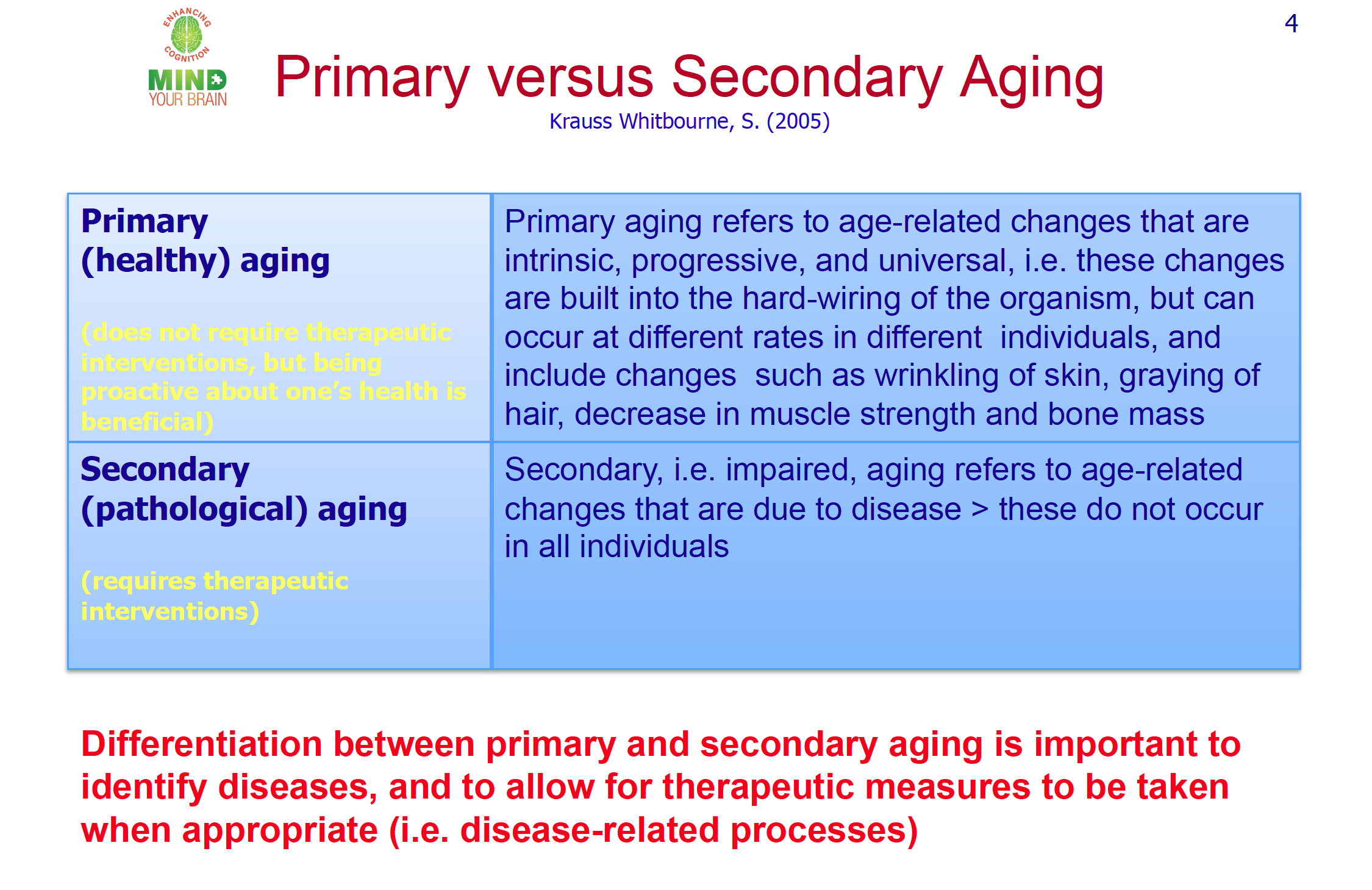
Medical conditions that can become an issue as we age include the dementias; the most prevalent type of dementia is Alzheimer’s Disease.
Following the embedded links, you can read more about cognitive ageing, find information on aging including dementia as well as brain therapy, using the embedded links. Alternatively, you can contact Heike to book a free consultation by emailing Heike at mindyourbrain1@gmail.com
Summary
-
Article NameHealthy versus Pathological Aging
-
Description“Pathological” refers to a disease process, so pathological ageing is not an inevitable part of getting older. But how do we distinguish healthy from pathological ageing? This overview explores the differences, including different types of dementia.
-
AuthorHeike Dumke
-
Publisher NameMind your Brain
-
Publisher Logo
 Cognitive aging/ cognitive health