
Cognitive Concerns, Cognitive Ageing, & Brain Health
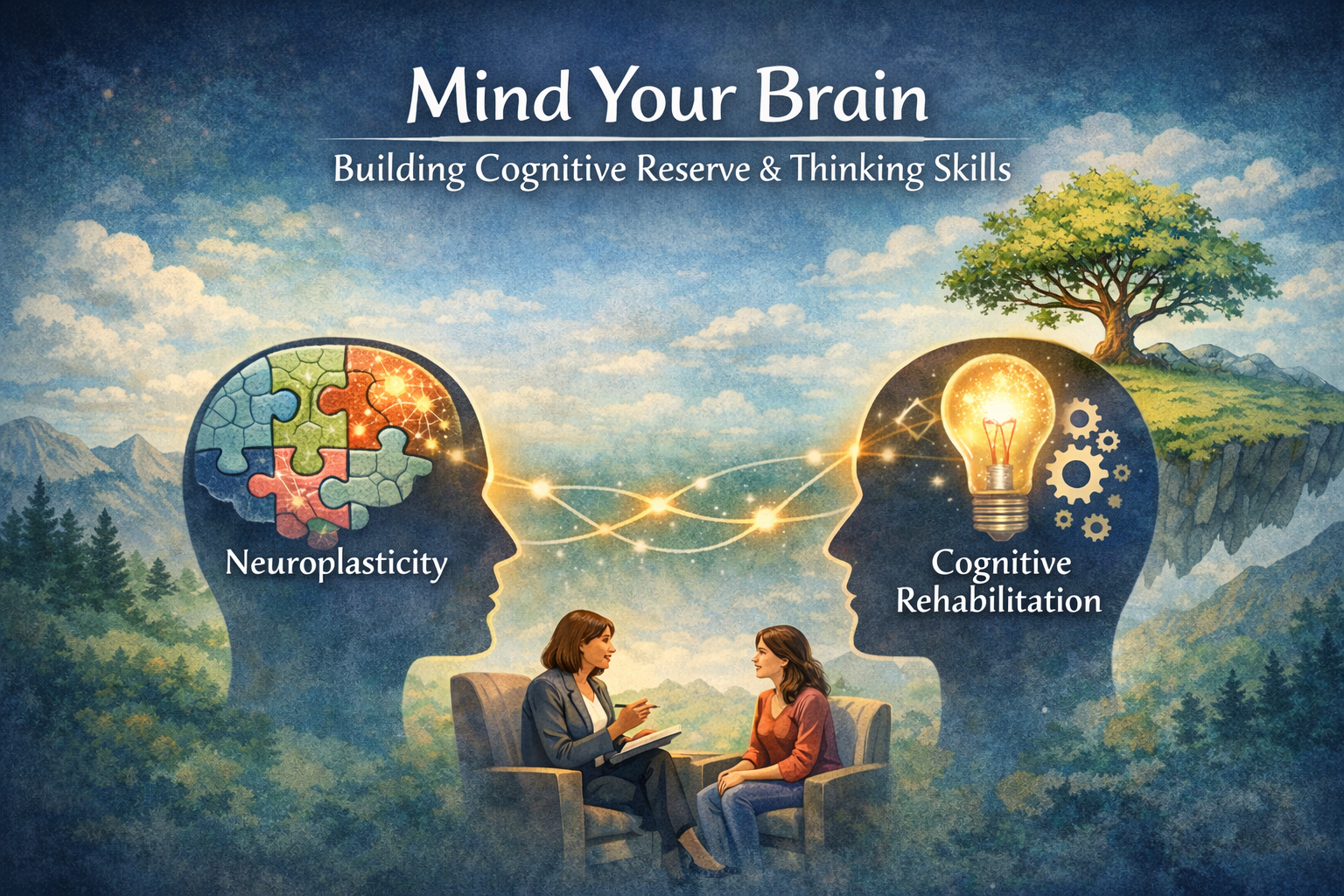
Understanding Cognitive Concerns, Cognitive Ageing & Brain Health
Below you’ll find information addressing questions and concerns related to three interconnected areas: 1. Cognitive Concerns, 2. Cognitive Ageing, and 3. Brain Health.
1. Cognitive concerns
I’m noticing thinking changes. What do they mean, and what can I do?
Cognitive concerns can arise when a person notices changes in how efficiently they think, remember, concentrate, process information, or manage everyday tasks. They can also arise when someone becomes more aware of difficulties that may have been present for some time but have become more noticeable as demands increase or circumstances change.
There are many possible reasons why a person may experience changes in cognitive efficiency or become concerned about their thinking abilities. These may include stress, fatigue, sleep difficulties, health conditions, medications, emotional or psychological strain, changes in life demands, recovery from illness or injury, or normal changes associated with ageing.
In today’s society, concerns about cognitive functioning can also be shaped by heightened awareness of dementia and cognitive decline. Some people may worry about developing dementia, while others may be concerned about whether changes in their thinking could affect their ability to manage work, household responsibilities, relationships, or other aspects of daily life.
Cognitive concerns therefore do not necessarily mean that a person is experiencing a progressive cognitive disorder. Understanding the nature of the concern, the circumstances in which it occurs, and factors that may be contributing can provide a more useful starting point.
2. Cognitive ageing
What changes in thinking and memory can happen as we age?
Cognitive ageing involves understanding changes in memory, thinking, and other aspects of cognitive functioning that may occur with age—including what is typical and when changes may warrant further attention.
Cognitive functioning is not completely constant across the lifespan. Even when a person is healthy, thinking efficiency and performance can fluctuate from day to day and across different situations.
Fatigue, chronic stress, poor sleep, illness, pain, emotional strain, changes in routine, and competing demands can all affect attention, memory, processing speed, mental flexibility, and the ability to concentrate. These influences can make cognitive performance feel different at different times without necessarily indicating a progressive decline.
Ageing can also be accompanied by gradual changes in some aspects of cognitive functioning. For example, it may sometimes take longer to retrieve information or learn something unfamiliar, while other abilities, such as knowledge and experience, may remain strong or continue to develop.
Understanding cognitive ageing involves distinguishing between normal variation and changes that may warrant further attention. It is also important to consider the many factors that can influence cognitive functioning at any particular point in life rather than assuming that every change is simply a consequence of ageing.
→ Learn more about healthy and pathological ageing
3. Brain health
What can I do to support my brain and cognitive functioning?
Brain health encompasses factors that can support brain functioning and cognitive wellbeing over time.
The brain is involved in virtually every aspect of human functioning. It supports cognitive processes such as attention, memory, learning, problem-solving, and decision-making, while also contributing to emotional regulation, sleep and wakefulness, movement and coordination, and the regulation of many automatic processes that keep the body functioning.
Cognitive functioning is therefore only one aspect of brain function, although it is an important one because it influences how we understand information, make decisions, solve problems, communicate, and manage many of the demands of everyday life.
Brain health is influenced by many factors, including physical health, sleep, physical activity, nutrition, stress, social connection, environmental factors, and the management of health conditions. Supporting brain health is not about achieving perfect cognitive performance or preventing every change associated with ageing. Rather, it involves understanding the factors that can influence brain and cognitive functioning and identifying realistic ways to support health and functioning over time.
Addressing Cognitive Concerns, Cognitive Ageing & Brain Health
Concerns about cognitive functioning can arise for many different reasons and at different stages of life.
Dr. Heike at Mind Your Brain provides individualized, clinically informed support to help you understand your cognitive concerns, explore contributing factors, and support cognitive wellbeing, confidence, and everyday functioning. This service includes education about factors that can affect cognitive functioning, cognitive ageing, dementia worry (worry about developing dementia), and brain health, along with evidence-informed approaches to support cognitive wellbeing, confidence, and independence.
Dr. Heike’s service may be appropriate if you identify with one or more of the following:
1. Subjective cognitive concerns
You are noticing changes in your memory, attention, thinking, or other aspects of cognitive functioning, even when others tell you that you seem fine, and and would like greater clarity, reassurance, and information about how to proactively support your cognitive health.
2. Cognitive difficulties under life demands
The demands of school, work, family, or everyday life are making it harder to think clearly, concentrate, remember, organize, or manage your usual responsibilities, leaving you feeling stressed or overwhelmed, and you would like support and information about how to better understand and address these challenges.
3. Dementia worry or concern about cognitive decline
You are worried about cognitive decline or developing dementia and would like to better understand these concerns, including how dementia worry may be influenced by ageing, personal experiences, or societal attitudes, and what you can do to address these worries while supporting your cognitive health.
4. Proactive cognitive and brain health
You are functioning well but want to be proactive about supporting your brain and cognitive health and maintaining cognitive wellbeing as you age.
5. Early cognitive decline
You have been told that you are experiencing early cognitive decline and want to better understand these changes and learn how to support your cognitive and everyday functioning and independence for as long as possible.
If you identify with any of the concerns above and want to learn more about what may be happening and what you can do to support your cognitive health and quality of life, Dr. Heike can help you explore the possibilities and provide appropriate guidance.
→ Discuss Cognitive Concerns with Dr. Heike →
Understanding Cognitive Changes. Supporting Brain Health. Addressing Cognitive Concerns with Confidence.
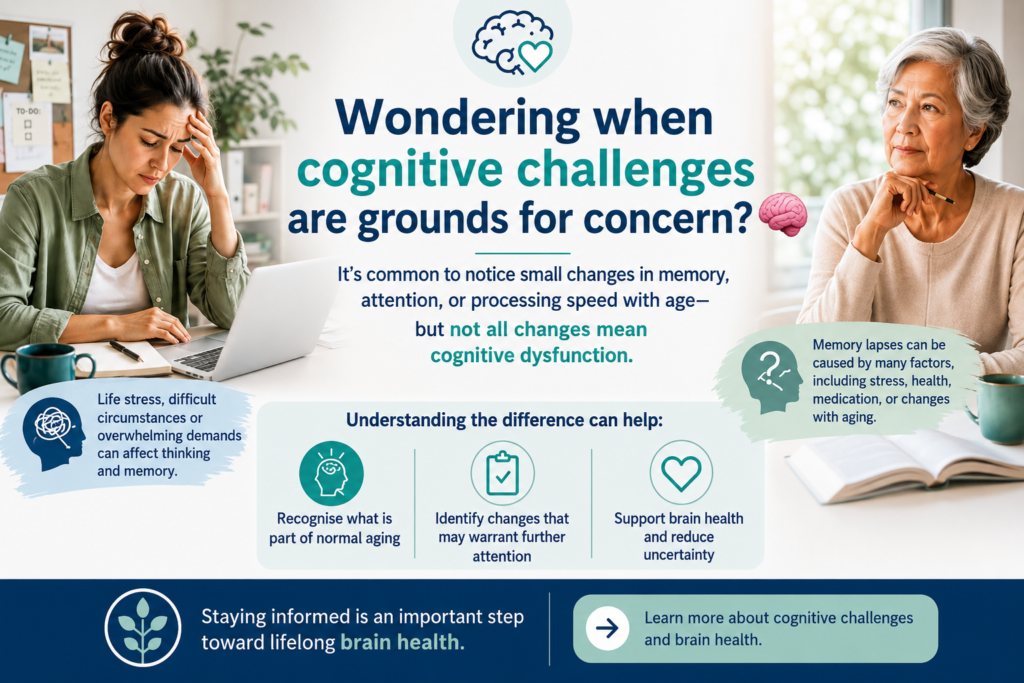
Many people experience uncertainty about memory and thinking changes, or notice memory problems, brain fog, or changes in thinking and focus at different points in life.
These changes can feel confusing—especially when you’re not sure what is normal, what may be stress-related, or whether it could be something more serious.
Cognitive changes happen throughout the lifespan. Not all changes are the same—and not all support fits.
Many people in this position find themselves in between systems:
- Medical care may rule out or monitor conditions—but not address their day-to-day impact.
- Community or brain wellness programs may offer valuable education and general strategies—but may not address an individual’s cognitive profile, challenges, and daily needs.
- Mental health services may not fully account for cognitive changes.
This is where neuro-informed counselling can help.
As a clinician and published researcher, Dr. Heike specializes in neuro-informed counselling to help individuals understand their cognitive concerns and what these changes may mean, explore contributing factors, and identify practical, individualized strategies and assist with their implementation to support cognitive health, confidence, independence, and meaningful daily functioning.
→ Discuss Your Memory and Cognitive Concerns with Dr. Heike →
Cognitive Health Concerns and Memory Changes
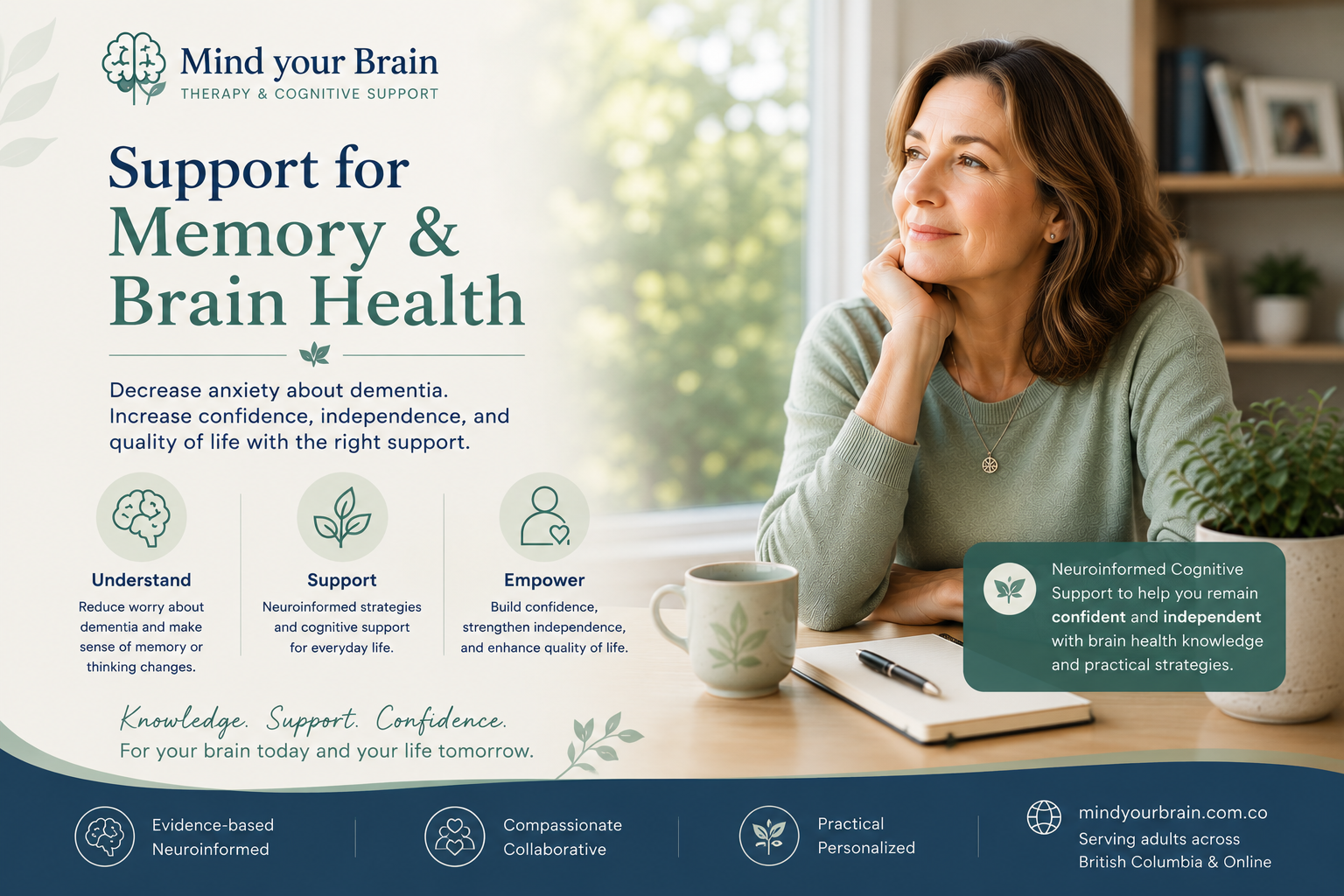
Research continues to highlight that many factors associated with cognitive health can be influenced through supportive lifestyle, health, and behavioural approaches. This provides opportunities to better understand individual strengths, address challenges, and support cognitive functioning over time.
If you are:
- worried about memory problems or memory loss
- unsure if this is “normal ageing”
- not sure whether the changes you are experiencing are within the normal range of cognitive functioning
- Wanting to understand what may be affecting your cognitive functioning and how to address the challenges you are experiencing
👉 Discuss Your Memory and Cognitive Concerns with Dr. Heike →
- ✔ No referral needed
- ✔ For adults across BC (online sessions)
- ✔ Focus on understanding and improving cognitive function
Support is available whether you have received a diagnosis, are experiencing cognitive changes, or simply have concerns about your cognitive health.
What This Service Offers
This service provides individualized, clinically grounded support for understanding and adapting to cognitive changes—while also addressing the emotional and practical impact.
We work together to:
- Understand the nature of your cognitive concerns (e.g., attention, memory, processing, mental fatigue)
- Identify contributing factors (e.g., stress, health conditions, life demands, recovery processes)
- Develop realistic, personalized strategies that fit your life
- Support adjustment, confidence, and sense of self when things feel different
This is not a one-size-fits-all brain training program.
Cognitive exercises and activities may be incorporated when appropriate, based on your individual goals, cognitive needs, everyday functioning, and preferences. If clinically appropriate, Dr. Heike may suggest structured cognitive exercises, apps, games, or other meaningful activities that provide an appropriate level of challenge.
The focus is on applying evidence-informed approaches in a personalized way—using strategies that are meaningful, practical, and connected to your everyday life.
It is about making sense of change, learning how to address it, and supporting meaningful daily functioning.
A Neuro-Informed Approach
Your cognitive functioning does not exist in isolation.
This approach integrates:
- Cognitive functioning (attention, memory, executive functioning)
- Emotional responses (e.g., anxiety, frustration, self-doubt)
- Daily life demands (work, responsibilities, routines, roles)
- Personal meaning and identity
Together, these factors create a whole-person understanding of your experience and guide more effective and sustainable strategies.
What This Is Not
To help clarify fit, this service is different from:
- Group-based cognitive wellness programs that provide general education, activities, or social engagement opportunities without individualized assessment and strategy development
- Adult day programs that provide structured daytime support and activities
- Standalone brain-training tools or cognitive apps used without individualized assessment, guidance, or connection to personal goals and everyday functioning
- Standard psychotherapy approaches that do not specifically address cognitive functioning needs
- Couples or family counselling focused on relationship patterns or longstanding interpersonal concerns
While those supports can be valuable, Dr. Heike provides individualized clinical guidance tailored to your specific situation.
Relationships and family systems may be affected by cognitive changes. This service can help individuals and families understand those changes and develop practical adaptations.
When the primary concern involves relationship conflict or longstanding family dynamics that are not primarily related to cognitive changes, couples or family counselling may be a more appropriate service.
If you are unsure whether Dr. Heike’s approach is the right fit for your situation, you are welcome to book a consultation to discuss your needs.
Learning More About Brain Health
Understanding factors that support brain health can be an important part of adapting to cognitive changes and maintaining cognitive functioning over time.
The following talk provides general information about lifestyle and behavioural factors associated with brain health. It is intended as an educational resource and does not replace individualized assessment or support. Each person’s cognitive functioning, health history, circumstances, and goals are unique.
Frequently Asked Questions
Is forgetfulness a normal part of ageing?
Some changes in memory and thinking can occur as part of normal ageing. For example, occasionally taking longer to recall information or needing more time to process new information can be common.
However, changes that interfere with everyday activities, feel significantly different from your usual functioning, or cause concern may benefit from further exploration.
When should memory changes be assessed?
Consider seeking support if you notice changes in memory, attention, problem-solving, or mental clarity that:
- affect your daily routines, work, or relationships
- require significantly more effort than before
- create worry or uncertainty about your cognitive health
- are changing over time
A healthcare provider can help determine whether further medical assessment is needed.
Can stress affect memory and concentration?
Yes. Stress, anxiety, sleep difficulties, emotional strain, and major life changes can influence attention, memory, mental flexibility, and cognitive stamina.
Understanding the relationship between stress, emotions, and cognitive functioning can be an important part of developing effective strategies.
Do I need a diagnosis to seek support?
No. Many individuals seek support because they notice changes in memory, focus, or mental efficiency but do not have a formal diagnosis.
This service focuses on understanding your concerns, identifying contributing factors, and developing individualized strategies to support everyday functioning.
What is the difference between neuro-informed counselling and brain training?
Brain training programs typically involve structured cognitive exercises designed to challenge specific skills.
Neuro-informed counselling integrates counselling approaches with cognitive rehabilitation principles to focus more broadly on understanding an individual’s cognitive strengths and challenges, then developing personalized strategies that support meaningful activities, independence, and everyday functioning.
When appropriate, cognitive exercises may be incorporated as one part of a broader individualized approach.
Support for Family Members and Caregivers
Cognitive changes can also affect partners, children, and others involved in daily support. When part of the counselling process, caregiver support may include:
- Understanding how cognitive changes (including dementia-related changes) may affect communication, behaviour, and daily interactions
- Developing practical approaches to support a loved one while maintaining realistic expectations
- Identifying sources of stress and learning strategies to reduce day-to-day strain
- Recognizing and supporting your own needs as a caregiver
If you are a caregiver and need support, explore our [Caregiver Counselling & Support] and [Caregiver Resources] pages for additional information.
When to Seek Additional Assessment
If there are significant or rapidly progressing changes, or concerns about neurological conditions, collaboration with your physician or specialist is recommended. This service can complement—not replace—medical care.
Getting Started
If you are noticing changes in how you think, focus, or function—and would like a clearer understanding of what is happening and what can help—this service offers a structured and supportive place to begin.
Book an Initial Consultation
to discuss your concerns and determine whether this approach is a good fit.
An Evidence-Informed Approach
Dr. Heike’s approach integrates evidence-informed principles from cognitive rehabilitation, psychology, neuropsychology, and neuroscience to provide neuro-informed counselling.
Cognitive rehabilitation approaches are supported by research in both clinical populations and healthy ageing contexts. This service can help individuals better understand their cognitive functioning, develop effective strategies, and maintain independence in everyday life.
Rather than focusing on generic “brain training” alone, this approach emphasizes individualized, meaningful strategies and, when appropriate, targeted cognitive activities that are relevant to your daily life and personal goals.
Psychological approaches, including cognitive behavioural strategies, may also support adjustment, coping, emotional responses, and problem-solving when cognitive changes affect daily life.
Together, these approaches provide individualized support that considers cognition, emotions, behaviour, and meaningful functioning.
Summary
-
Service TypeNeuro-Informed Counselling for Cognitive Concerns and Daily Functioning
-
Provider NameMind your Brain
400-601 West Broadway, BC-V5C 4C2, Telephone No. 1 - 604 - 802 - 7291 -
AreaBritish Columbia incl Greater Vancouver, and Yukon
-
DescriptionDr. Heike provides neuro-informed counselling and evidence-based support related to cognitive concerns, cognitive ageing, and brain health—including concerns about memory, forgetfulness, or cognitive decline, changes in cognitive functioning or brain fog, dementia worry (worries about developing dementia), and the impact of stress and life demands on cognitive functioning.
-
Publisher Logo
 Cognitive aging/ cognitive health