
Cognitive Rehabilitation Therapy and Support
Rehabilitation for Cognitive Difficulties
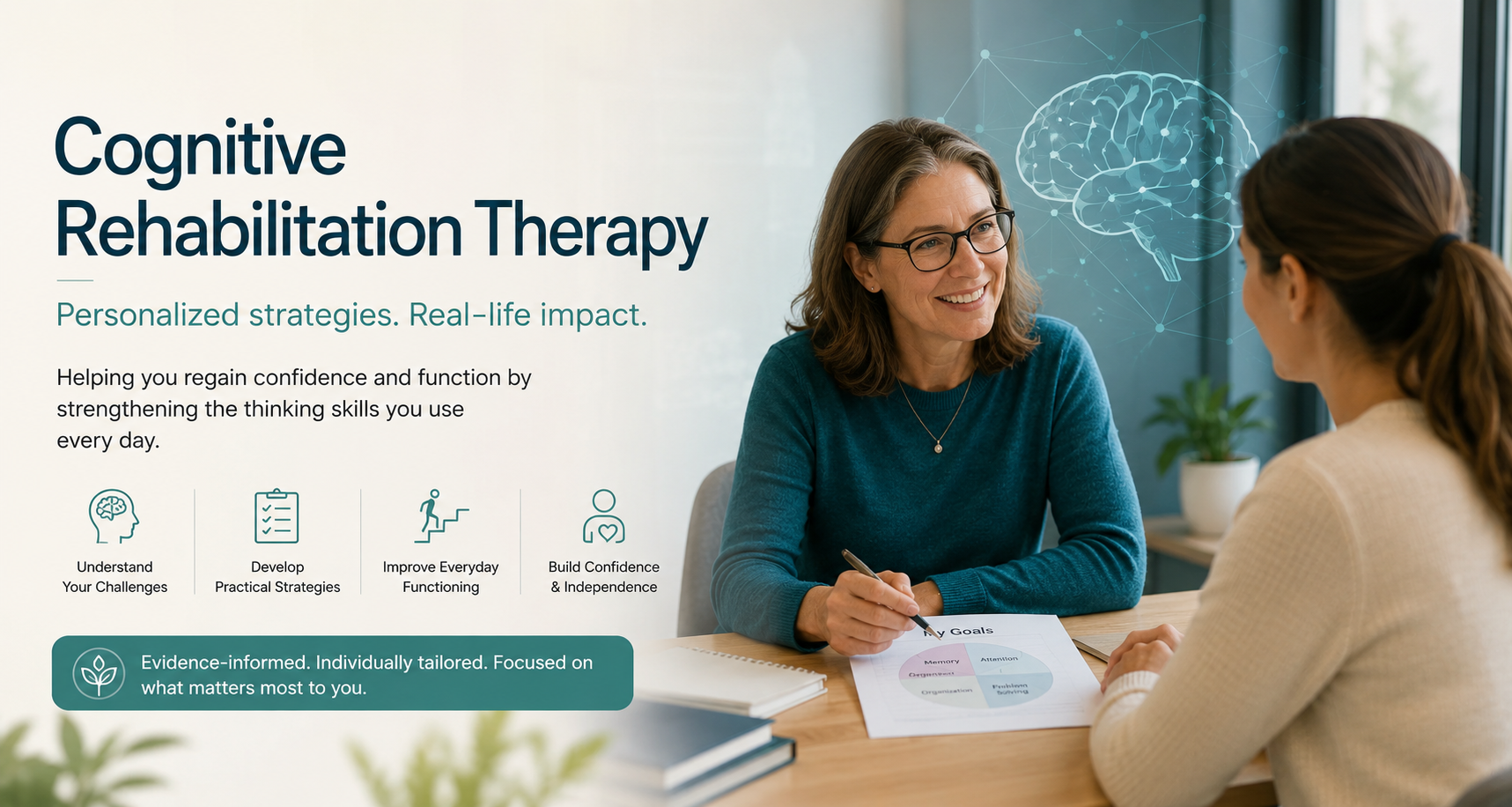
Cognitive difficulties or deficits can arise following an acquired neurological injury, illness, or medical treatment and, in turn, affect a person’s ability to return to work, return to school, or resume other meaningful everyday activities.
Cognitive Rehabilitation Therapy (CRT) provides individualized rehabilitation support for people experiencing identified cognitive difficulties and their impact on daily functioning, with a focus on helping them manage these difficulties and work toward meaningful functional goals.
CRT may include targeted cognitive exercises, learning new ways of approaching cognitive demands, developing and strengthening cognitive and executive functioning skills, and using or adapting familiar strategies that continue to work for the individual. The goal is to improve cogniitve and everyday functioning, increase independence, and support participation in school, work, home, and community life.
If cognitive difficulties are affecting your everyday functioning, Dr. Heike’s individualized CRT approaches and neuro-informed counselling can help you understand your cognitive strengths, address cognitive challenges and associated psychological and emotional impacts of those challenges, and develop approaches that fit your needs.
Book an appointment or schedule a free consultation with Dr. Heike.
 While general counselling can provide important support for the emotional and psychological consequences of cognitive difficulties—including adjustment, stress, uncertainty, frustration, and changes in daily life—Cognitive Rehabilitation Therapy (CRT) directly addresses cognitive functioning through education, targeted exercises, skill development, strategy identification and implementation, and individualized rehabilitation approaches.
This integrated approach, combining CRT with neuro-informed counselling techniques, allows Dr. Heike to address both cognitive functioning and the emotional and psychological consequences of cognitive difficulties. Dr. Heike’s CRT approach begins with understanding an individual’s cognitive strengths, challenges, goals, and everyday demands. Rehabilitation approaches may then focus on areas such as memory, attention, processing, organization, problem-solving, executive functioning, and the ability to apply cognitive skills effectively in everyday situations.
Rebuilding Cognitive Skills for Everyday Life

Dr. Heike Dumke provides individualized care and guidance in a safe, compassionate, and non-judgmental environment, with support tailored to each person’s cognitive needs, psychological experience, and functional goals.
How do I know whether CRT Services by ‘Mind your Brain’ are appropriate for me?
CRT may be appropriate if you answer yes to one or more of the following questions:
1. Have you experienced cognitive difficulties (e.g., changes in memory, attention, processing, organization, or problem-solving) following an acquired brain injury, neurological condition, or medical treatment such as chemotherapy that affect your everyday functioning?
2. Are cognitive difficulties making it harder to manage work, school, household responsibilities, relationships, or other everyday activities?
3. Would you like professional support to address identified cognitive difficulties that affect your everyday life through education, targeted exercises, and practical strategies to support everyday functioning?
A yes to one or more of these questions does not necessarily mean that CRT is the right service for you. Your individual concerns, circumstances, and goals help determine the most appropriate approach.
When cognitive changes are related to a concussion, acquired brain injury, neurological condition, cancer treatment, or another medical condition, CRT can help identify cognitive strengths and challenges, establish individualized rehabilitation goals, and develop strategies to restore or improve cognitive functioning to the greatest extent possible, while also supporting areas where difficulties persist. This may include restorative approaches, compensatory strategies, and practical tools to improve everyday functioning and independence.
If you are primarily concerned about changes in memory or thinking but do not have a known brain injury, neurological condition, or medical cause for these concerns, Neuro-Informed Counselling for Cognitive Concerns may be a more appropriate starting point. This service provides support for understanding cognitive concerns, cognitive health, normal age-related changes, and worries about cognitive decline.
If you are unsure which service is right for you, you can explore the full range of services or discuss your concerns with Dr. Heike to determine an appropriate starting point.
→ Discuss Your Cognitive Challenges with Dr. Heike →
Wondering what Cognitive Rehabilitation Therapy involves and how it can help? This short video explains the principles of CRT, what it can address, and how individualized rehabilitation can support cognitive functioning and everyday life.
Summary
-
Service TypeCognitive Rehabilitation Therapy Services
-
Provider NameMind your Brain
400-601 West Broadway, BC-V5C 4C2, Telephone No. 1 - 604 - 802 - 7291 -
AreaBritish Columbia incl Greater Vancouver, and Yukon
-
DescriptionCognitive rehabilitation to address cognitive difficulties following neurological injury, illness, or medical treatment
-
Publisher Logo
 Cognitive aging/ cognitive health